01 / 05
Burst pipes
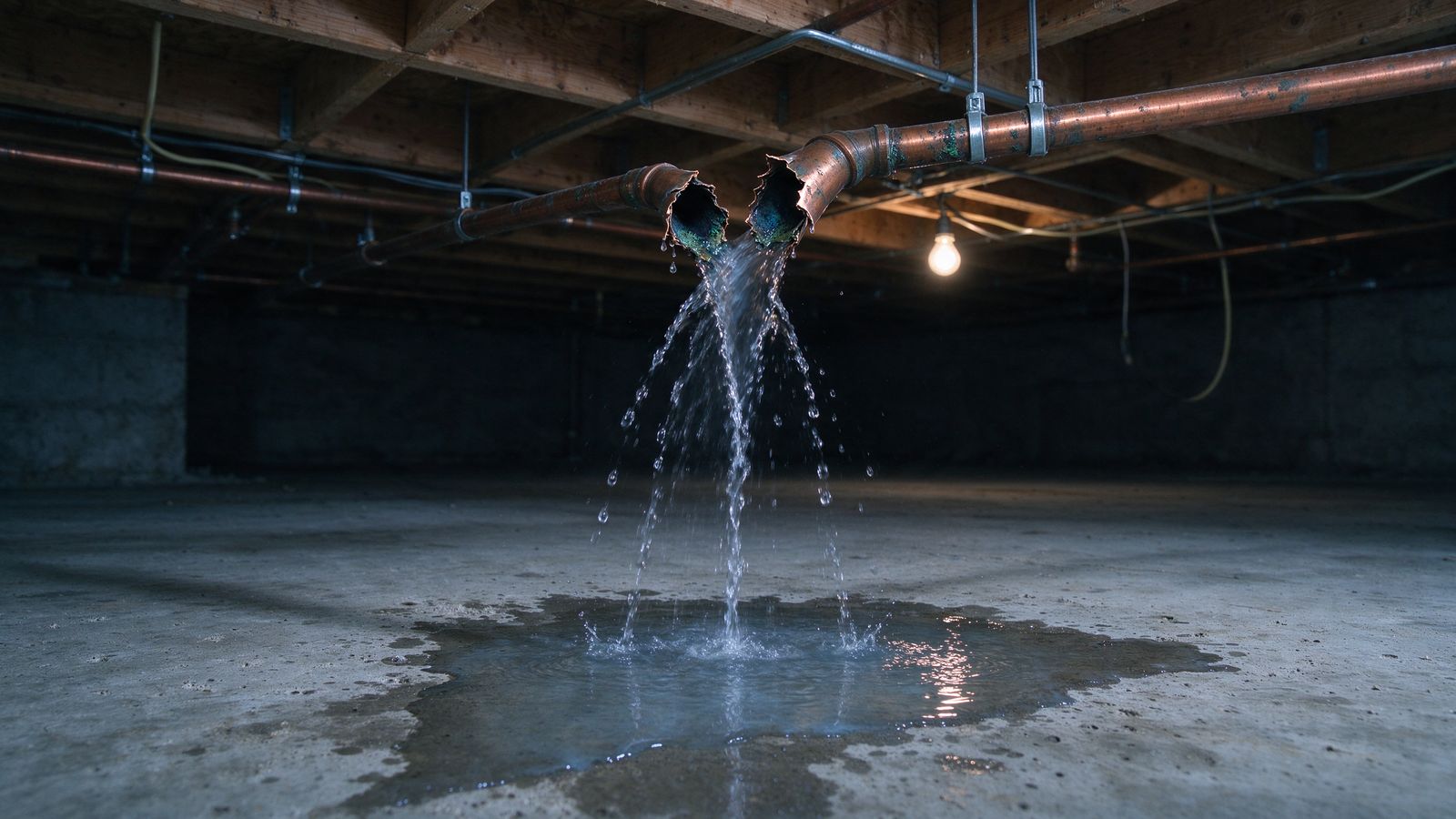
A split line runs until the main is closed. Frozen pipes often fail on the first thaw, not during the freeze, so a quiet pipe is not a safe one.
Burst pipe steps →
Translate this guide
Guide, not a contractor Independent emergency plumbing guide. Plumber 24h is not a plumbing contractor, is not licensed to do plumbing work, and does not dispatch plumbers or promise a response time. Licensing rules vary by state, so verify any plumber locally. Smell gas? Leave now and call your gas utility or 911 from outside.Independent guide, not a plumber or dispatch service. Licensing varies by state; verify locally. Smell gas? Leave, then call your gas utility or 911.
The first hour of a plumbing problem
Water where it should not be is a race against volume. Close the valve, protect what you can, write it down, then decide who to call. This guide walks each step in plain language.
Rule one
A half-inch supply line can move several gallons a minute at normal household pressure. Towels, buckets and phone calls do not change that number. Closing a valve does.
That is why every guide on this site starts in the same place: the main shutoff, or the small fixture stop behind the toilet or under the sink. Learn where yours are on a calm afternoon, label them, and make sure everyone in the house can turn them.
How to find and close your shutoffsTriage tool
Pick what you are seeing. You get the first moves in order, a plain read on how urgent it is, and the guide to read next.
What is happening right now?
Five situations
Each one has its own first move. Hover or tap a panel to open it.
A split line runs until the main is closed. Frozen pipes often fail on the first thaw, not during the freeze, so a quiet pipe is not a safe one.
Burst pipe steps →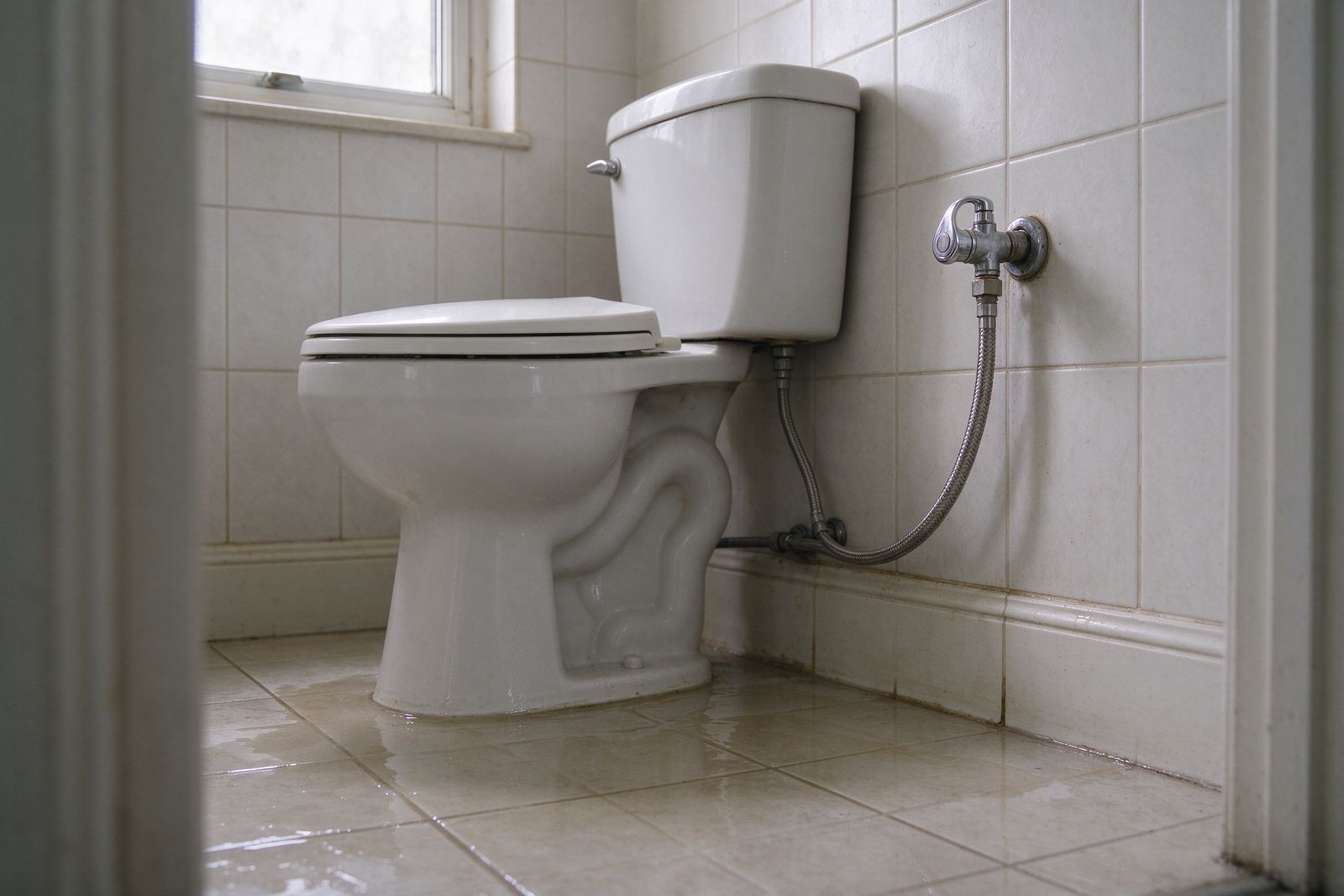
The stop valve behind the bowl ends most overflows in seconds. If it is seized, the float in the tank is your backup.
Overflow and backup steps →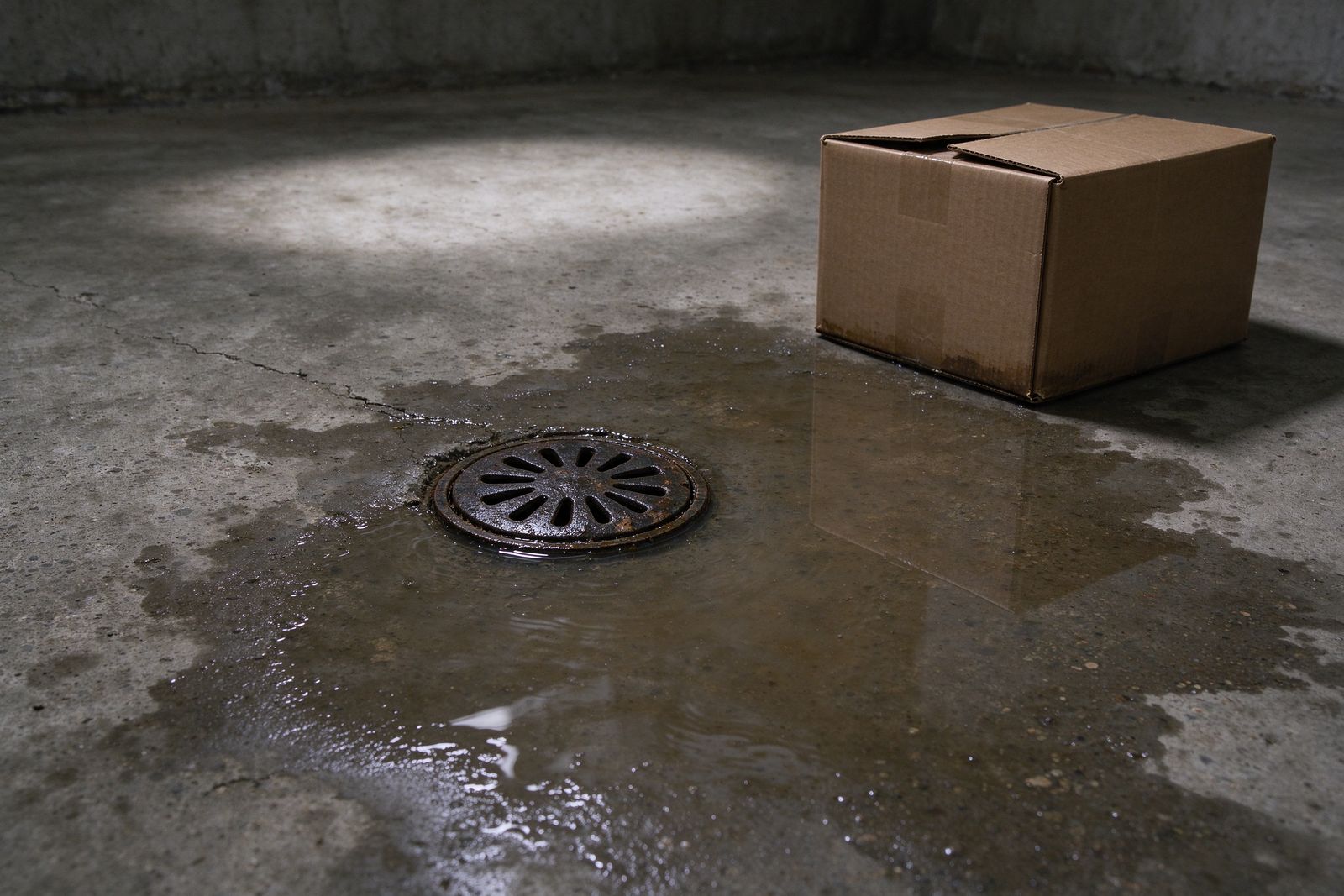
Wastewater rising at the lowest drain points to a blocked main line. Stop running water everywhere in the house and keep clear of it.
Sewer backup steps →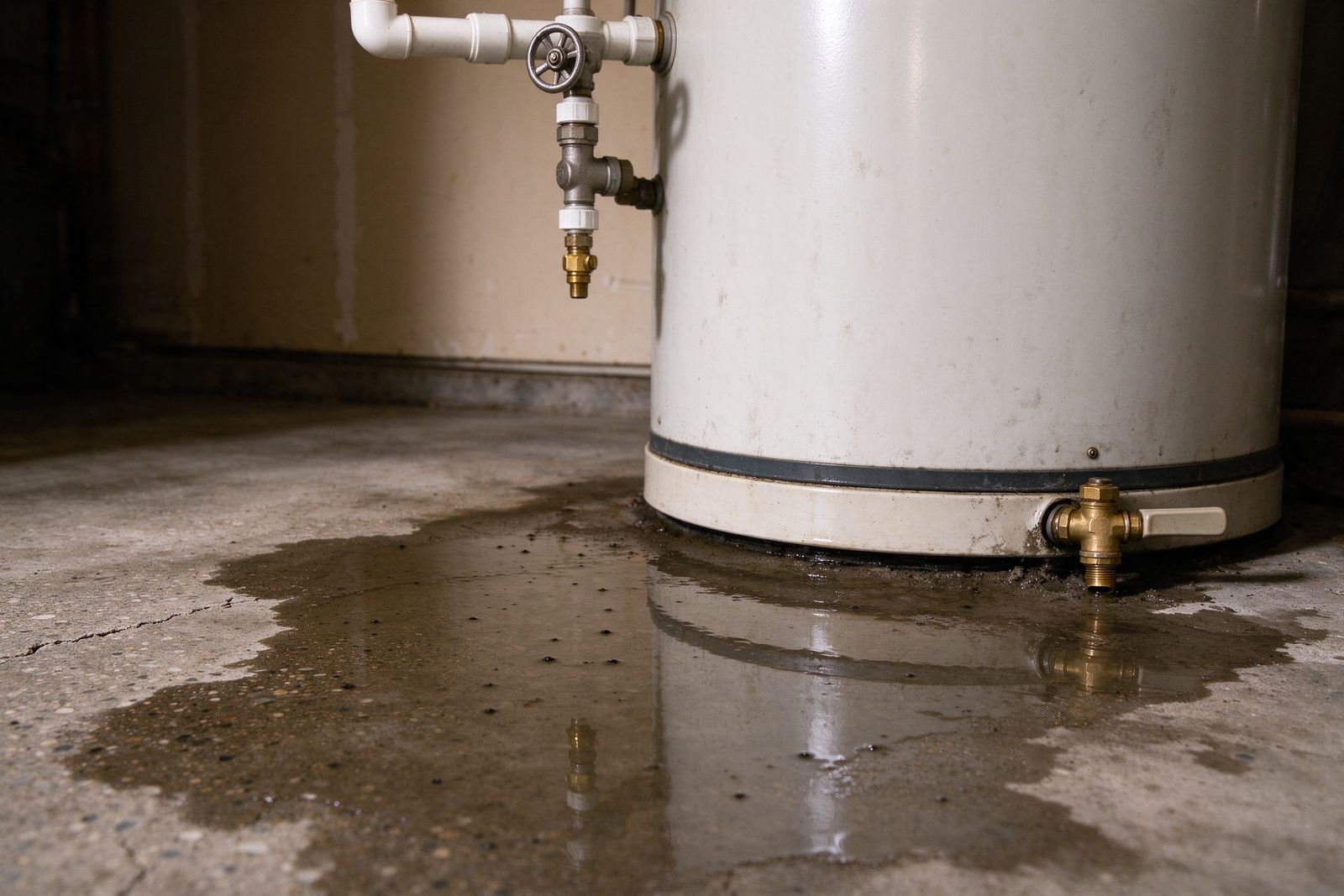
Close the cold supply, cut the energy source, and watch for hot water. A gas smell changes everything: leave and call from outside.
Water heater steps →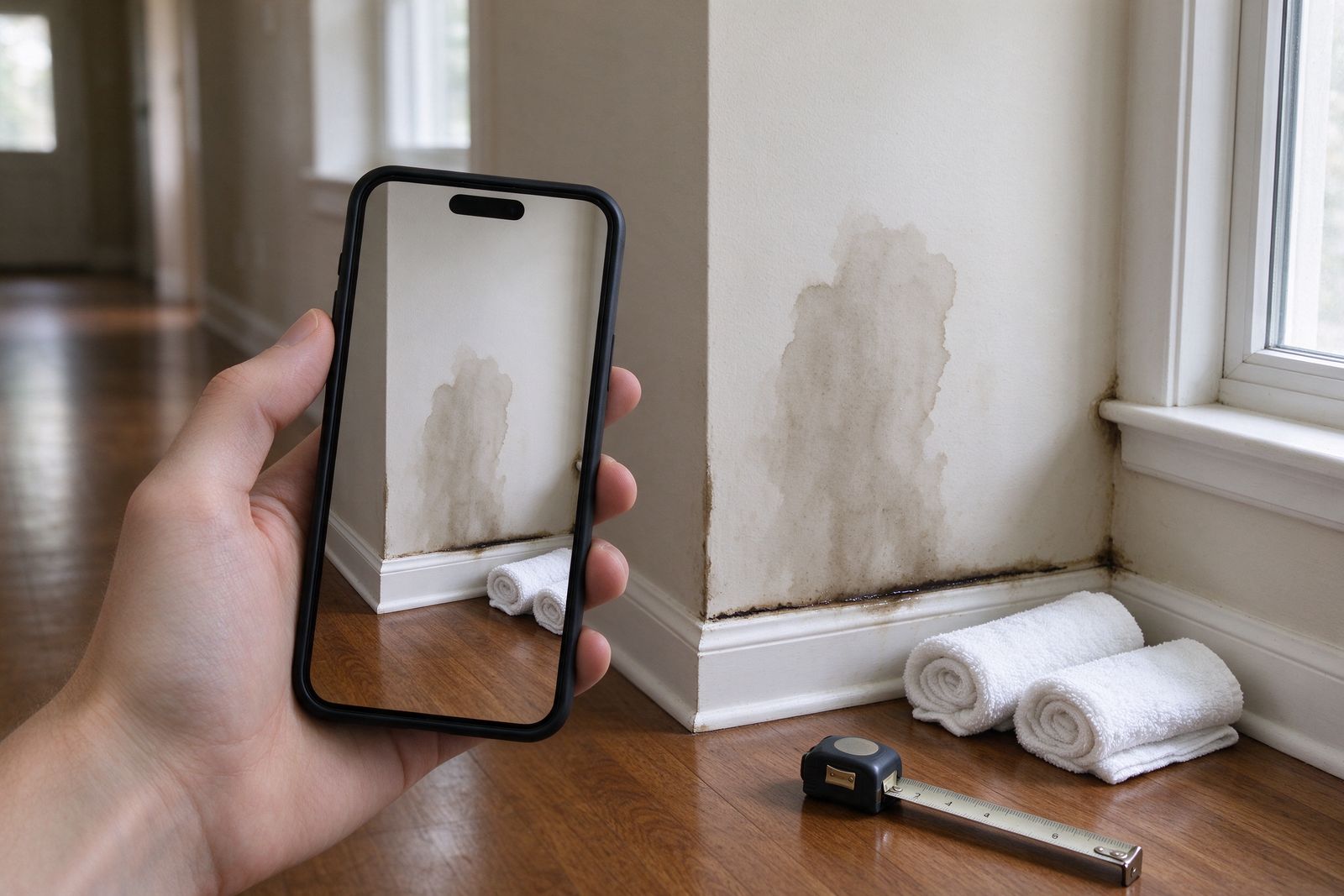
Photos, dates and receipts taken in the first hour are the ones an adjuster asks for later. Take them before cleanup.
Documentation steps →The first fifteen minutes
The order matters more than speed. People lose time hunting for a plumber while water is still running, or start mopping before anyone has photographed the damage.
Is it a true emergency?Close the fixture stop if the problem is at one fixture. Close the main if it is a pipe, a ceiling leak, or you are not sure. Then open a low cold tap to drain the pressure.
Water and electricity: stay out of standing water near outlets or appliances, and use the breaker only from a dry spot. Gas smell: leave and call from outside. Sewage: gloves, boots, and keep children and pets away.
Wide shots of each room, close-ups of the source, a ruler or tape against the water line on walls, and a note of the time. A short video walking through the space is quick and thorough.
Move rugs, electronics, papers and furniture out of the wet area. Put foil or plastic under furniture legs. Open windows if the weather allows and get air moving.
Once the water is off, the pressure is lower. You can ask about licensing, trip fees and after-hours rates before anyone arrives, instead of after.
Know your valves
Most homes have some mix of these. Learn the shape, and you will recognize it with a flashlight at two in the morning.
PLATE A
Round wheel handle. Turn clockwise to close; it takes several turns. Old ones can seize or snap, so use steady hand pressure, not a wrench.
PLATE B
Lever handle. A quarter turn closes it: lever across the pipe is off, lever in line with the pipe is open. Quick and reliable.
PLATE C
Often in a box at the property line or beside the meter. Many need a meter key, and some utilities ask that only they operate it. Check with yours.
PLATE D
The small oval handle behind a toilet or under a sink. Turn clockwise. It isolates one fixture so the rest of the house keeps water.
Decision matrix
A fast sort for when you are deciding whether to pay after-hours rates. If you cannot stop the water, it is always the left column.
Gas smell
Natural gas and propane carry an added odorant that many people describe as rotten eggs or sulfur. If you notice it near a water heater, furnace, range or dryer, the house is not the place to troubleshoot.
Your gas utility handles suspected leaks, and its emergency number is on your bill and website. If you cannot reach it, call 911.
Before anyone arrives
Pricing for nights, weekends and holidays varies widely between companies and regions. These questions make it visible before you agree to a visit.
Describe the situation and where you are. The inquiry goes to the site owner by email. It is not monitored around the clock and nobody is dispatched automatically, so stop the water and call locally if it cannot wait.
Open the request formQuick answers
Water you cannot stop, sewage coming up a drain, water reaching electrical fixtures, a leaking water heater, or no water in freezing weather all justify urgent help. A contained drip with a working shutoff valve usually does not.
Most often on the wall where the water line enters the house: a basement, crawlspace, utility closet, garage, or beside the water heater. Homes in warm climates sometimes have it outside near the foundation or at the meter box.
Leave the house first, then call your gas utility or 911 from outside. A gas smell is not a plumbing do-it-yourself job, and the utility is the right first call.
No. Plumber 24h is an independent guide. The service request form sends an inquiry by email; it is not a dispatch line, it is not monitored around the clock, and nobody is sent automatically.
Ask how the trip or diagnostic fee works, whether after-hours rates apply and from what time, whether a written estimate comes before work starts, and how the plumber is licensed where you live.